Quick Answer
Fish floss OEM refers to contract manufacturing of dried, shredded fish snack products — made by steaming, deboning, and slow-frying fish meat until it separates into light, fluffy strands — under a buyer's own brand and packaging specifications. Buyers typically choose the fish species (tuna, salmon, pollock, or bonito), flavor profile, moisture level, and packaging format, while the manufacturer handles raw material sourcing, food-safety-certified production, and private label packaging. Fish floss is valued as a protein-rich, ready-to-eat topping and snack across Asian markets, and OEM programs let brands enter the category without building their own processing facility.
What Is Fish Floss
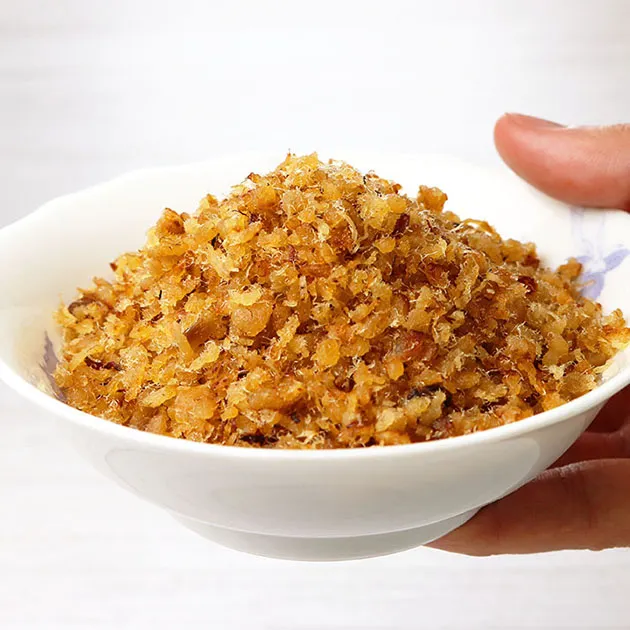
Fish floss (also called fish flakes or yu song) is a dry, fibrous food product made by cooking fish meat until tender, removing all bones and skin, then slow-frying and mechanically shredding the meat until it forms light, airy strands with a texture similar to cotton candy. It is traditionally eaten as a topping for rice, congee, or bread, and has grown into a standalone snack format sold in pouches and jars across retail and gift channels.
- Made primarily from white fish, tuna, salmon, or bonito, depending on the target flavor and price point
- Naturally high in protein and low in moisture, giving it a long ambient shelf life when packaged correctly
- Sold as a rice topping, bread filling, snack food, and premium gift box item across Asian and export markets
Why Fish Floss OEM Demand Is Rising
Packaged snack brands, bakeries, and gift retailers increasingly look to fish floss as a differentiated, protein-forward product category, and OEM manufacturing lets them add it to their lineup without investing in their own fish-processing equipment.
- Growing consumer interest in high-protein, low-sugar snack alternatives to traditional fried or sugary snacks
- Export demand for shelf-stable Taiwanese and regional specialty foods from overseas Asian grocery and gift markets
- Bakery and food service brands seeking a ready-made ingredient for buns, rice balls, and savory pastries
- Private label snack brands wanting a differentiated SKU that does not require in-house fish processing capability
For most buyers, the appeal of an OEM partnership is that it converts a capital-intensive process — deboning, steaming, and precision frying — into a straightforward finished-goods purchase with agreed specifications on taste, texture, and packaging.
How Fish Floss Is Made
Raw Material Selection and Preparation
Production begins with selecting fresh or frozen fish and removing bones, skin, and dark meat that could introduce a fishy off-taste. The remaining white meat is steamed to firm the protein structure before further processing, since fish requires shorter steaming time than pork or chicken due to its lower collagen and elastin content.
Frying and Shredding
The steamed fish is slow-fried at a controlled temperature while being continuously stirred and mechanically pressed, which breaks the meat into fine strands as moisture evaporates. Seasoning — typically sugar, soy sauce, and sesame oil — is added during this stage to develop the characteristic sweet-savory flavor.
Moisture Control During Frying
Precise moisture control during the frying stage is what determines both the texture and shelf stability of the finished floss; under-drying leaves the product prone to clumping and mold growth, while over-drying produces a harsh, overly brittle texture that loses the light, fluffy mouthfeel buyers expect.
Cooling and Packaging
After frying, the floss is cooled promptly to prevent residual heat from continuing to cook the product and to reduce the risk of condensation forming inside the package, which could otherwise introduce moisture and shorten shelf life. The cooled floss is then weighed and sealed under food-safety-controlled conditions.
Nutritional Profile of Fish Floss
Fish floss is naturally protein-dense because it is made almost entirely from deboned fish meat with minimal filler. Independent nutritional analyses of fish floss products show a macronutrient composition of roughly 24 to 30 percent protein, 31 to 43 percent fat, and 22 to 33 percent carbohydrate, with total energy in the range of 500 to 575 kilocalories per 100 grams, largely reflecting the oil absorbed during frying.
Because fish is also a source of omega-3 fatty acids, vitamin D, and selenium, fish floss made from whole fish meat can retain some of these beneficial nutrients, though buyers targeting a health-forward positioning should ask their OEM partner about frying oil type, added sugar levels, and sodium content, since some commercial fish floss products carry high salt and sugar content that can offset the nutritional benefits of the fish itself.
Fish Floss vs. Pork Floss
Fish floss and pork floss (rousong) are produced using a similar shredding and frying method, but they differ in raw material cost, flavor, and target audience. Fish floss generally commands a premium position due to higher raw material cost and appeal to consumers seeking a lighter, seafood-based alternative to traditional pork floss, while offering a naturally lower collagen content that results in a softer, finer strand structure.
Brands building a mixed snack lineup often carry both formats side by side rather than choosing one over the other, since the two products appeal to overlapping but distinct customer segments — pork floss to buyers seeking a familiar, heartier flavor, and fish floss to buyers specifically seeking a seafood-based or lighter option. From an OEM planning perspective, this means a manufacturer capable of producing both formats on a shared production schedule can simplify supply chain coordination for a buyer who wants to launch or expand a floss product line.
Quality Control and Food Safety Standards
Because fish floss is a ready-to-eat product typically consumed without further cooking, food safety controls throughout production are critical to preventing microbial contamination and ensuring consistent shelf life. Unlike products that undergo a final cooking step in the buyer's kitchen, any lapse in hygiene or moisture control during fish floss production carries directly through to the consumer, which is why third-party audits and documented process controls matter more for this category than for many other snack formats.
- HACCP-based process controls covering raw material inspection, frying temperature, and packaging environment
- Routine microbiological testing for pathogens and moisture content to confirm shelf-stability before shipment
- Metal detection and foreign-object screening prior to final packaging
- Batch traceability records linking finished product lots back to raw material sourcing
Buyers sourcing fish floss for export or retail distribution should request the manufacturer's food safety certification documentation and recent third-party lab test reports as part of supplier qualification, rather than relying on verbal assurances alone.
Packaging and Shelf Life Considerations
Pouch, Jar, and Sachet Formats
Flexible pouches are the most common format for retail fish floss due to their low cost and effective moisture barrier, while glass or PET jars are often used for premium gift positioning. Single-serve sachets are increasingly requested for food service and travel-size retail applications.
Shelf Life and Storage
Properly dried and sealed fish floss typically maintains quality for six to twelve months at ambient temperature when packaged with adequate moisture barrier protection and, where applicable, an oxygen absorber or nitrogen flush to limit oxidation of the frying oil, which is the primary driver of rancidity and flavor degradation over time.
Applications and Target Markets
- Retail snack pouches sold through grocery, convenience, and online channels
- Bakery and pastry filling for buns, rolls, and savory breads
- Rice ball (onigiri) and congee topping for food service use
- Premium gift boxes for holiday and corporate gifting markets
- Export specialty food distribution to overseas Asian grocery retailers
How to Choose a Fish Floss OEM Partner
- Confirm the fish species and sourcing origin used in the base recipe, and whether substitutions are disclosed
- Request samples to evaluate texture, moisture level, and flavor balance before committing to a production run
- Verify food safety certifications (HACCP, ISO 22000, or equivalent) and ask for recent lab test reports
- Clarify minimum order quantities and lead times for both bulk private label and custom flavor development
- Discuss packaging format options and whether the manufacturer can support export-compliant labeling
- Ask about shelf-life testing data specific to the requested packaging format and storage conditions
Common Mistakes When Sourcing Fish Floss OEM
- Choosing a supplier based on price alone without reviewing food safety documentation
- Skipping a sample evaluation stage before committing to a full production run
- Overlooking packaging moisture-barrier performance, which directly affects shelf life
- Assuming all fish floss recipes are interchangeable without confirming species, sodium, and sugar content
- Not clarifying export labeling and documentation requirements for the target market before production begins
Frequently Asked Questions
Q: What fish is typically used to make fish floss?
A: Tuna, salmon, pollock, and bonito are the most common choices, each offering a different flavor and price point.
Q: Is fish floss healthy?
A: It is a good source of protein and several minerals, though buyers should check added sugar, salt, and oil content, since some commercial products are higher in these than others.
Q: How long does fish floss last after packaging?
A: Properly dried and sealed fish floss typically stays fresh for six to twelve months at room temperature, depending on packaging format.
Q: Can fish floss be made without added sugar?
A: Yes — recipe formulation, including sugar and salt levels, can usually be adjusted during OEM custom flavor development.
Q: What is the minimum order quantity for fish floss OEM production?
A: Minimum order quantities vary by manufacturer and packaging format, so this should be confirmed directly during supplier qualification.
Q: What packaging format is best for retail fish floss?
A: Flexible pouches are the most common and cost-effective choice, while jars are often used for premium or gift positioning.
Q: How is fish floss different from pork floss?
A: Fish floss uses fish meat instead of pork, generally has a lighter texture and finer strand structure, and typically commands a premium price.
Q: What certifications should a fish floss OEM manufacturer have?
A: HACCP and ISO 22000 are the most commonly requested food safety certifications for ready-to-eat snack production.
Working With an Established Production Partner
Buyers new to the category often underestimate how much of the finished product's consistency depends on the manufacturer's frying and moisture-control expertise rather than the recipe alone. A production partner with an established track record across multiple fish species and packaging formats is typically better positioned to troubleshoot texture or shelf-life issues quickly, since these problems usually trace back to subtle variations in raw material moisture or frying temperature rather than the seasoning formula itself.
Conclusion
Fish floss OEM manufacturing gives snack brands, bakeries, and specialty food retailers a practical way to add a protein-rich, differentiated product to their lineup without building in-house fish processing capability. The most reliable sourcing approach is to evaluate a potential partner on food safety certification, sample quality, and packaging shelf-life performance rather than price alone, and to clarify flavor customization and export labeling requirements early in the qualification process. With the right OEM partner, fish floss can serve as a flexible product across retail snacking, bakery ingredients, and premium gifting channels.